Japan launches spacecraft to mysterious moons of Mars in a bold mission to bring home soil samples
A former educator, Lucas holds a degree in Education from Nazareth College and has transitioned to journalism, focusing on education reporting for the Rochester Beacon. He aims to shed light on both the challenges and triumphs within local schools.
More from Lucas →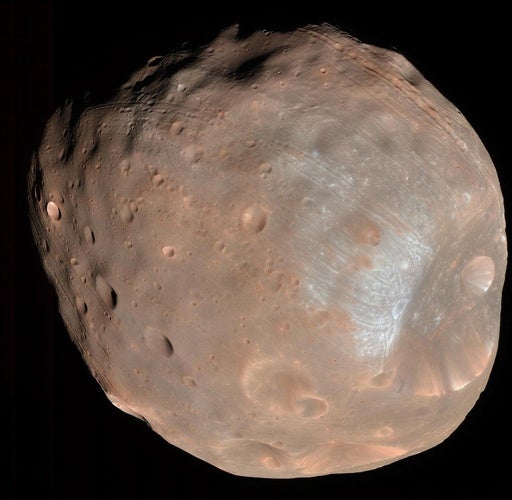
As dawn broke over Japan's Tanegashima Island, a team of passionate scientists and engineers gathered to witness a moment that could redefine our understanding of the cosmos. Their hearts raced as the spacecraft, a symbol of international collaboration and unwavering dedication, soared into the sky, marking the beginning of a five-year journey to the enigmatic moons of Mars. This ambitious endeavor, spearheaded by the Japan Aerospace Exploration Agency (JAXA (Japan Aerospace Exploration Agency)), aims to achieve a feat never before accomplished: bringing back soil samples from the Martian moons.
The Japanese spacecraft launched on a recent Tuesday, embarking on its critical mission to explore Mars' mysterious celestial companions, Phobos and Deimos, and retrieve invaluable soil samples. This bold undertaking represents a significant leap forward in planetary science, promising to unlock secrets about the formation of our solar system and the origins of life itself. The mission, known as Martian Moons eXploration (MMX), is a testament to human ingenuity and the relentless pursuit of knowledge.
A Journey to the Red Planet's Enigmatic Companions
This five-year mission is a truly global effort, bringing together five of the world's leading space agencies. Beyond JAXA (Japan Aerospace Exploration Agency), key partners include the National Aeronautics and Space Administration (NASA), the European Space Agency (ESA), the French Space Agency (CNES), and the German Aerospace Center (DLR). Their combined expertise and resources are focused on a singular, audacious goal: to land a robotic prospector and a rover, specifically the MASCOT-2 from DLR and CNES, on Phobos, the larger and closer of Mars' two pint-sized moons.
The launch itself was a moment of profound triumph. Before dawn, from the country's main spaceport on Tanegashima Island, the H-IIA rocket propelled the MMX spacecraft skyward. Just an hour later, officials declared resounding success as the spacecraft separated precisely as planned from the rocket's upper stage. Flight controllers, who had poured years of their lives into this project, burst into applause, their joy reflecting the immense dedication and countless hours of meticulous work. They jumped to their feet, shaking hands and embracing, a powerful illustration of the deep bonds formed through such an ambitious scientific endeavor.
JAXA President Hiroshi Yamakawa encapsulated the sentiment, stating, "This is a historic moment for planetary exploration." Project Manager Yasuhiro Kawakatsu echoed this enthusiasm, adding, "We are embarking on a journey to unlock the secrets of the solar system." These sentiments resonate deeply with the human spirit's relentless pursuit of knowledge, a quest that often begins with a spark of curiosity in childhood and is nurtured within supportive communities and families.
Unprecedented Challenges and Scientific Promise
While NASA has successfully landed nine spacecraft on Mars over the past 50 years, and China achieved a notable touchdown in 2021, no mission has ever reached Phobos or its smaller companion, Deimos. More significantly, no one has managed to fetch samples from Mars or its moons. This mission is designed to change that, with the MMX spacecraft expected to arrive at Mars in September 2025, attempt a landing on Phobos in 2026, and return its precious cargo to Earth by 2029.
The scientific goals of the MMX mission are profound. By analyzing samples from Phobos, scientists hope to determine whether Mars' moons are captured asteroids or remnants of a larger impact on Mars itself. Understanding their origin could provide crucial insights into the early formation of the solar system. Furthermore, the mission will investigate the potential presence of water ice on Phobos, a discovery that could have significant implications for future human exploration of Mars, providing a potential resource for fuel and life support.
The estimated budget for this groundbreaking mission is approximately $300 million, or 39 billion yen, a substantial investment that underscores the global commitment to advancing our understanding of the cosmos. This investment is not merely in hardware and technology; it is an investment in the future, in inspiring generations to come, and in fostering the spirit of inquiry that drives human progress.
Rochester's Connection to the Stars
For residents of Rochester, this distant mission to the Martian moons resonates deeply with our community's own spirit of scientific inquiry and innovation. Our city has a proud history of contributing to scientific advancements, from optics to space technology. Institutions like the University of Rochester and the Rochester Institute of Technology (RIT) consistently foster environments where students are encouraged to dream big and pursue ambitious scientific goals, much like the MMX team.
This mission serves as a powerful reminder of the importance of education and the pursuit of knowledge, values that are often instilled within strong, supportive families. When children are encouraged to explore, to question, and to learn, they are better equipped to contribute meaningfully to society. The awe inspired by such missions can ignite a lifelong passion for science and discovery, guiding young minds toward careers that push the boundaries of human understanding.
Inspiring the Next Generation of Explorers
The international collaboration demonstrated by the MMX mission also highlights the power of unity and shared purpose. In a world often marked by division, seeing nations come together for a common scientific good is a beacon of hope. This spirit of cooperation is something we strive to cultivate in our own Monroe County and across New York State, recognizing that collective effort yields the greatest rewards, whether in space exploration or in building stronger local communities.
As families gather to discuss the wonders of space, perhaps inspired by articles like this or resources from Space.com on Phobos and Deimos or Britannica on Phobos, they are reinforcing the foundational values of curiosity and intellectual growth. These conversations, often happening around the dinner table or during a visit to a local museum, are crucial for nurturing the next generation of scientists, engineers, and thinkers who will tackle the challenges of tomorrow.
A Glimpse into the Future
As the MMX spacecraft continues its silent journey through the vastness of space, the team looks to the future with anticipation and hope. The successful launch is merely the first step in a complex ballet of orbital maneuvers, landings, and sample collections. The hope of discovery, of unlocking secrets waiting on the surface of Phobos, ignites imaginations across the globe, from the seasoned scientists in mission control to a child gazing at the night sky in Rochester.
This mission embodies the human spirit's relentless drive to explore and understand. It reminds us that while our daily lives may be grounded, our aspirations can reach for the stars. The MMX mission is not just about rocks from a distant moon; it is about the enduring human quest for knowledge, the power of collaboration, and the inspiration it provides for families and communities to foster a love for learning and discovery for generations to come. The journey ahead is long, but the potential rewards for humanity are immeasurable, promising to enrich our collective understanding of our place in the universe.